Reducing our carbon emissions

Carbon Neutrality 2045

Our Roadmap to Reduce Carbon Emissions

As an international pharmaceutical company specialized in ophthalmology, Laboratoires Théa operates in a highly regulated environment where patient safety, quality standards, and continuity of care are paramount. Any change in materials, processes, or suppliers must therefore be carefully assessed and implemented progressively.

Aware of the environmental challenges facing the healthcare sector, Théa integrates environmental considerations into its activities while operating within strict regulatory, technical and safety constraints. These considerations are progressively incorporated into the design, production and delivery of treatments.

In this context, Théa has defined a structured roadmap aimed at reducing carbon emissions across its operations and value chain. This approach is designed to align with the global climate objective of carbon neutrality by 2045 and to support a step-by-step reduction of emissions over time.


Carbon Neutrality as Part of Our Broader CSR Commitment

Carbon Reduction Within a Broader CSR Approach

Carbon reduction is one component of a broader Corporate Social Responsibility framework. Environmental, social and ethical priorities are translated into structured roadmaps and integrated into governance and decision-making processes.

The approach is based on:

  • Measured and progressive emission reductions
  • Collective mobilization across the Group
  • Collaboration with partners and suppliers
  • Continuous adaptation to scientific and regulatory developments

Contributing towards global climate targets of carbon neutrality by 2045 relies on step-by-step progress, involving teams across the Group and close coordination with partners throughout the value chain.

A Climate Strategy Based on Measurement

A Climate Strategy Based on Measurement

A Comprehensive Carbon Footprint Assessment

In 2023, Théa conducted its first comprehensive carbon footprint assessment, covering:

  • Scope 1 emissions: direct emissions from our operations
  • Scope 2 emissions: indirect emissions related to energy consumption
  • Scope 3 emissions: indirect emissions across the value chain, including raw materials, purchasing, logistics and product life cycle

This assessment forms the foundation of our decarbonization roadmap, enabling us to identify priority emission sources and define structured actions.

Our 2030 Intermediate Targets

As part of a measurable and progressive approach, we are committed to:

  • Reducing Scope 1 and Scope 2 emissions by 42% by 2030 compared to 2022
  • Reducing Scope 3 emissions by 25% by 2030 compared to 2022

Our carbon trajectory is monitored regularly, with updated assessments every two years and an expanding reporting scope. By 2030, activities representing more than 90% of Group revenue will be covered by our carbon accounting framework.

Governance at the Core of Our Climate Strategy

Governance at the Core of Our Climate Strategy

The success of our low-carbon transition relies on strong governance integrated at the highest level of the organization.

An Environment Committee has been established and reports directly to the Executive Committee. Key functions — including Innovation, Purchasing and Operations — are actively involved in defining and implementing carbon reduction initiatives.

Our commitments include:

  • Group-level coordination of environmental topics

  • Integration of climate criteria into decision-making processes

  • Participation in recognized sector initiatives and working groups

  • Progressive employee training on climate-related issues

  • Structured dialogue with suppliers and partners

This governance model ensures consistency, transparency, and alignment with pharmaceutical regulatory requirements.

Eco-Design and Responsible Purchasing

Eco-Design and Responsible Purchasing

A significant share of our carbon footprint is linked to materials, suppliers and distribution. Our strategy therefore focuses on two key levers: eco-design and responsible sourcing.

Eco-Design as a Driver of Sustainable Innovation

For more than 30 years, Théa has integrated eco-design principles into the development of its products and packaging in order to reduce environmental impact wherever possible.

Our actions include:

  • Reducing plastic weight in packaging
  • Improving recyclability
  • Integrating recycled and lower-carbon materials
  • Reducing waste across the entire product life cycle
  • Considering transportation impacts during product design

By 2030 and 2035, we aim to:

  • Establish a product carbon database to guide eco-design decisions
  • Make plastic-free wipes available to all Théa wipe consumers worldwide
  • Reduce by an average of 50% the carbon impact of our main primary packaging

Through eco-design, sustainability becomes a catalyst for responsible pharmaceutical innovation.

Responsible Purchasing to Transform the Value Chain

Our responsible purchasing policy integrates environmental and social criteria into sourcing decisions.

It is based on:

  • Embedding CSR criteria in tenders and supplier selection
  • Integrating carbon considerations into strategic supplier discussions
  • Establishing governance around circularity
  • Engaging suppliers and CMOs in carbon reduction pathways

By 2035, the objective is for all suppliers and manufacturing partners to be engaged in actions supporting eco-design and carbon reduction efforts aligned with global climate objectives.

Production for European markets is carried out in Europe, contributing to reduced transport-related impacts.

Energy Efficiency and Low-Emission Mobility

Energy Efficiency and Low-Emission Mobility

Reducing direct and energy-related emissions is a core component of our corporate decarbonization strategy.

Improving Building Energy Performance

We are continuously enhancing the energy efficiency of our owned and leased facilities through:

  • Equipment modernization

  • Optimization of heating, ventilation and lighting systems

  • Integration of renewable energy solutions

  • Deployment of technical building management systems

  • Installation of photovoltaic panels for self-consumption

Since 2025, 100% of the energy used by our sites in France has come from renewable sources.

We maintain demanding environmental standards for both renovations and new construction projects.

Transitioning to Low-Emission Mobility

We are progressively transforming our fleet and mobility practices through:

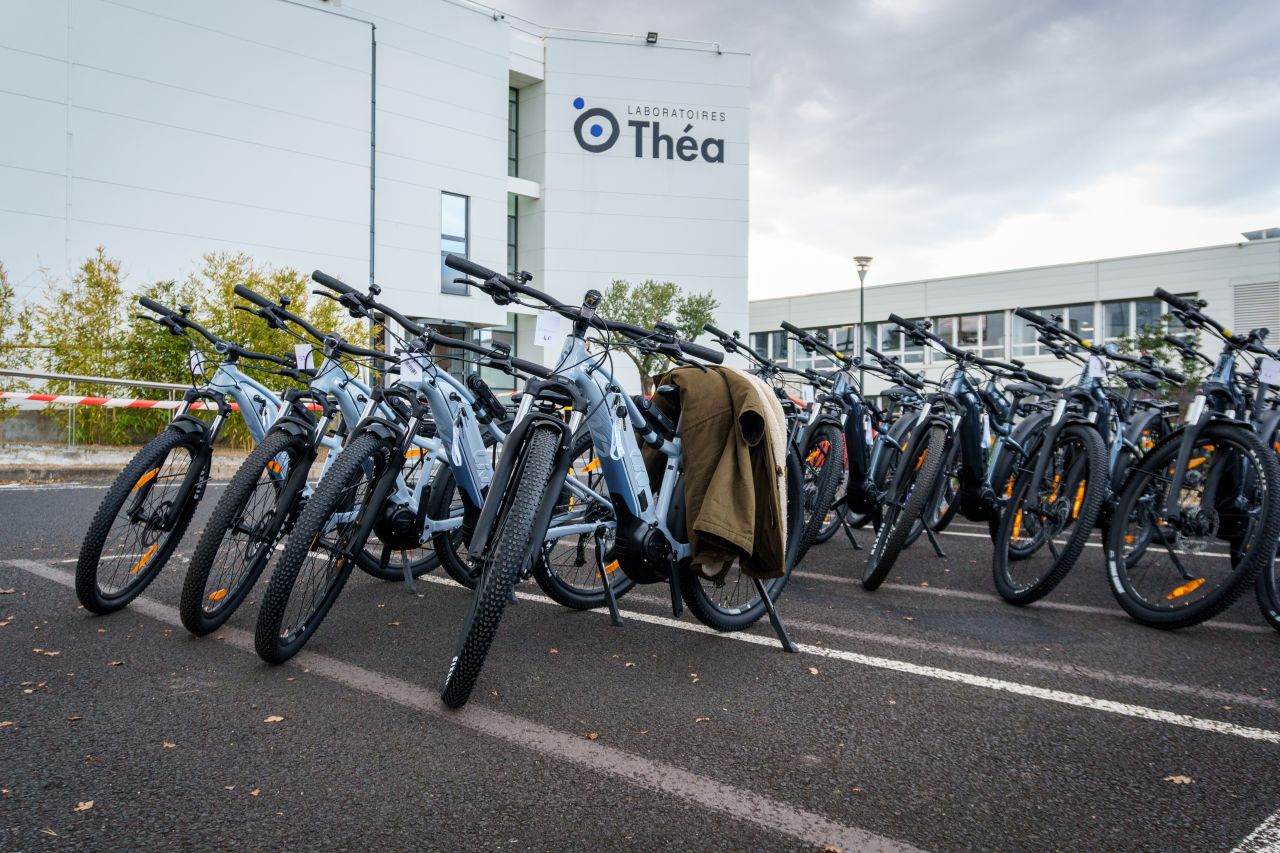
  • Installation of electric vehicle charging stations

  • Fleet electrification

  • Promotion of carpooling and sustainable commuting

  • Eco-driving training programs

These initiatives directly contribute to reducing Scope 1 and Scope 2 greenhouse gas emissions.